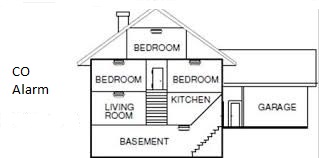
Beginning July 1, 2011, the Carbon Monoxide Poisoning Prevention act (Senate Bill SB1483) requites all single-family homes with an attached garage or a fossil fuel source to install carbon monoxide alarms. As well as per building code 310.9.1of California all residence must have smoke alarms.
As reported by the Consumer Products Safety Commission (CPSC) Approximately 200 people are killed by accidental CO poisoning with an additional 5000 people injured. The National Fire Protection Association (NFPA) also reported that three out of five fire deaths are the result of no smoke alarm present in home.
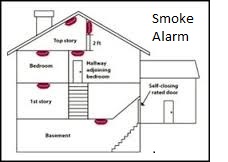
Smoke alarms should be installed in the following locations:
- Each bedroom
- Immediately outside the sleeping rooms and areas
- On each level of home and basements (not including crawl spaces) and livable attics.
- In dwellings with split-levels that have a door between adjacent levels, an alarm shall be located on each level.
- Smoke alarms are not required in garages
Carbon Monoxide Alarms (CO) should be installed in the following locations:
- Immediately outside the sleeping rooms an areas.
- On each story, including basements and livable areas.
- They are not required in garages.